How to decorate a living room
A practical, room-first walkthrough — from layout and rug to palette, lighting and the final edit. Free, no login, with real before-and-after examples to steal a direction from.
Most living rooms go wrong in the same way: the furniture is bought first and the room is arranged around whatever fits. Decorating works better in the opposite order — settle how the space is used and laid out, then layer in colour, light and detail. The six steps below follow that big-to-small order, and each one is a decision you can make today without spending a thing.
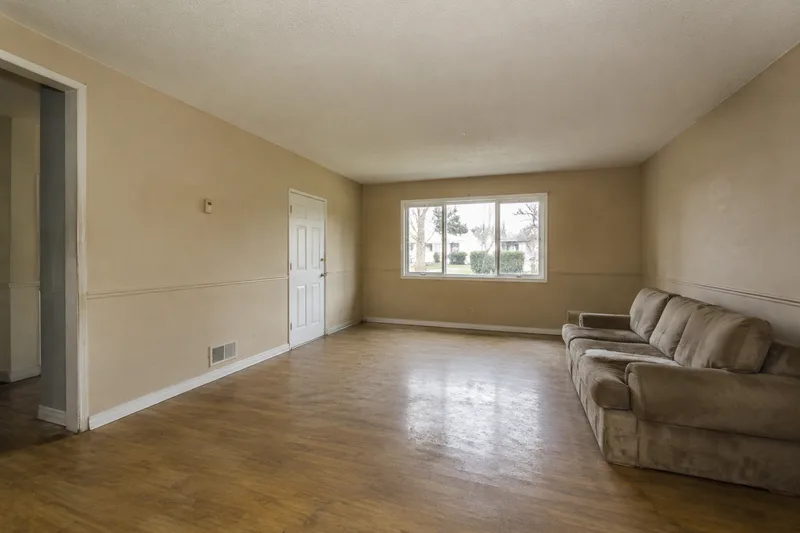
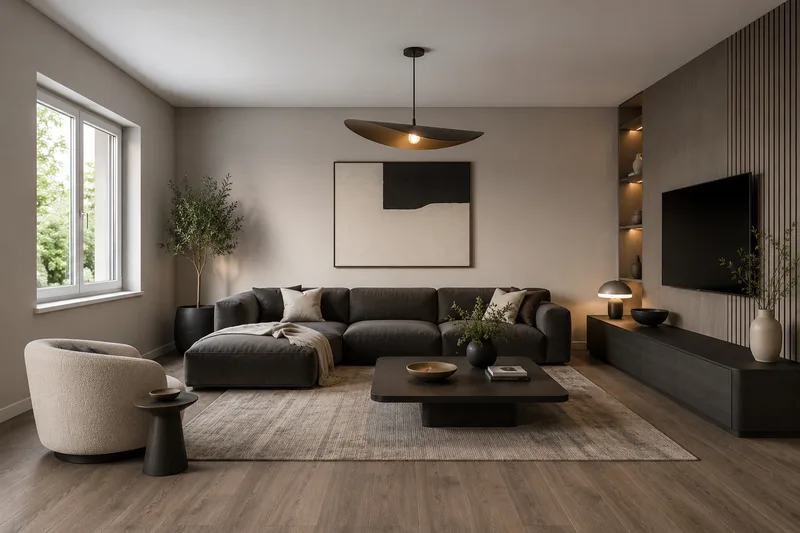
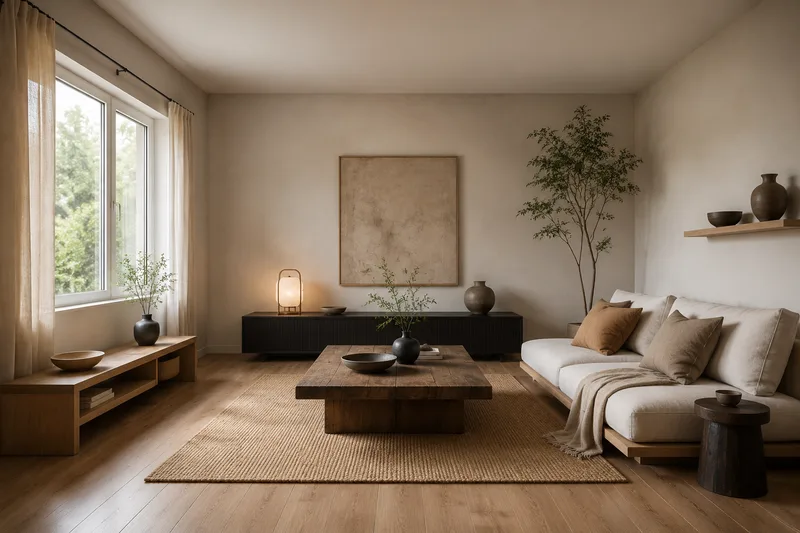
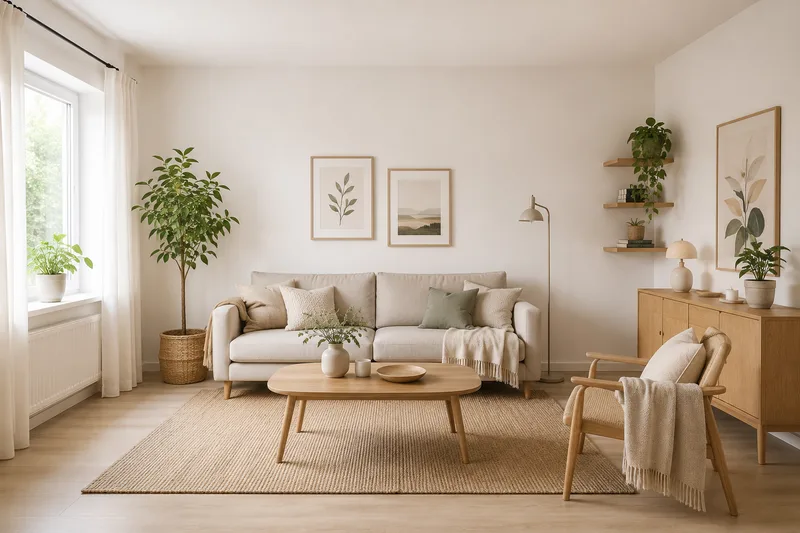
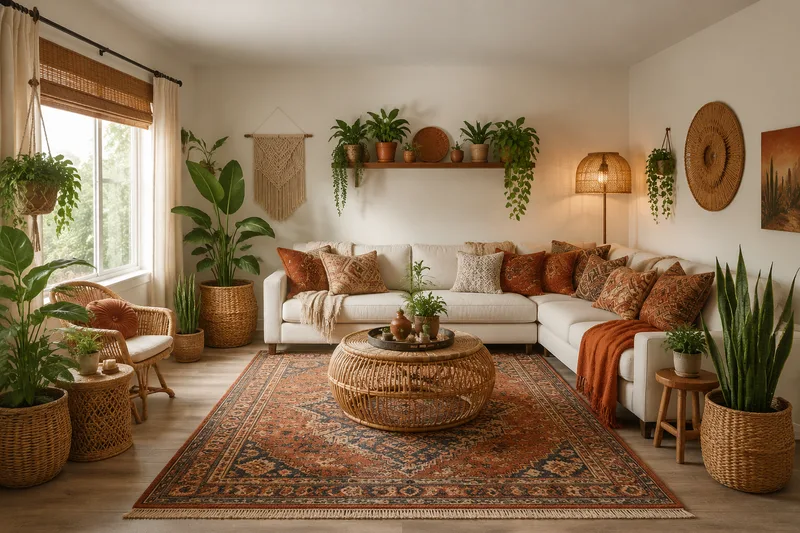
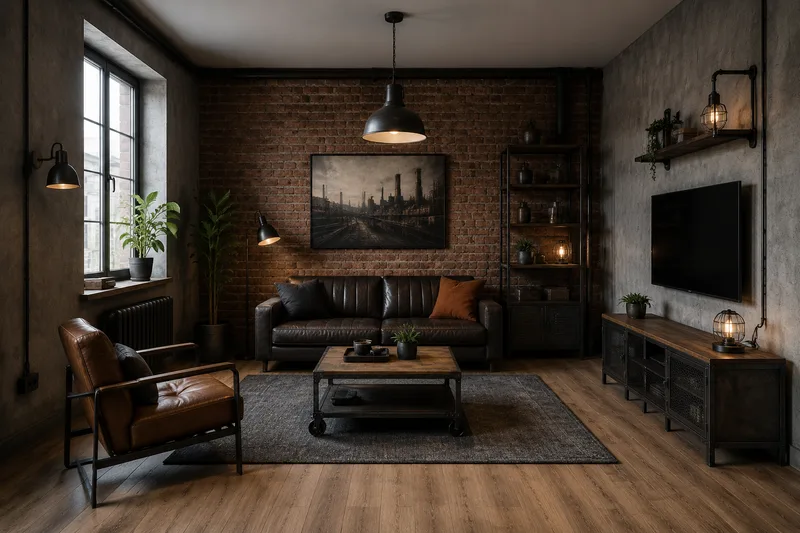
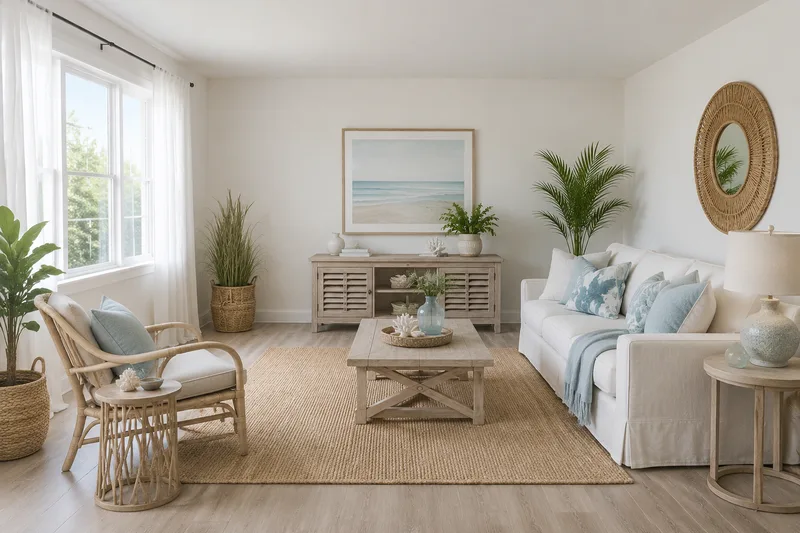
It helps to see the moves before you commit to them. Further down, every image is a real AI before-and-after of the same living room in a different style — drag the slider to watch how a rug, a palette and warmer lighting transform a plain space while the layout stays put. Prefer to start from your own room? The AI room decorator restyles it across the same six looks, free and with no login.
- 01
Start from the layout, not the furniture
Before choosing a single piece, decide where the room looks best from and what it is for. Find the focal point — usually a window, a TV wall or a fireplace — and face the main seating toward it. Leave a walking path of at least 30 inches around the seating, and pull the sofa a few inches off the wall so the room feels arranged rather than pushed to the edges.
- 02
Anchor the seating with a rug
A rug defines the living zone and stops furniture from floating. Size it so the front legs of the sofa and chairs sit on it — bigger is almost always better than too small. In an open-plan room, the rug is what visually separates the lounge from a dining or work area without needing a wall.
- 03
Build a palette of three
Pick one neutral for large surfaces (walls, sofa), one secondary tone for rugs and curtains, and one accent for cushions, art and small pieces. A rough 60-30-10 split keeps the room cohesive while leaving room for personality. If you are unsure, take the palette from the largest patterned item you own and work outward from there.
- 04
Layer the lighting in three levels
One ceiling light flattens a room. Combine ambient light (overhead or wall), task light (a reading lamp by the chair) and accent light (a table lamp or picture light) so you can shift the mood from bright to cozy. Warm bulbs around 2700K and a couple of switchable sources do more for a living room than any single fixture.
- 05
Hang art and dress the windows at the right height
Centre wall art at roughly eye level — about 57 inches to its middle — and hang it so the bottom sits 6 to 8 inches above the sofa back, not floating near the ceiling. Mount curtain rods close to the ceiling and let panels just kiss the floor; that single move makes windows and the whole room read taller.
- 06
Style the shelves and edit
Group accessories in odd numbers, vary height and leave breathing space rather than filling every surface. Mix a few personal objects with books and one or two plants for life. Then take a photo of the room on your phone — the camera flattens it and instantly shows what to remove. Decorating is finished by subtraction as much as addition.
One living room, six directions
Each image is a real AI before-and-after of the same room — drag the slider to compare the makeover against the original.
Decorating a living room — FAQ
In what order should I decorate a living room?
Work from big to small: settle the layout and focal point first, then the rug, then the palette, then lighting, and finish with art, window treatments and accessories. Deciding the layout before buying furniture saves the most money and mistakes.
How do I decorate a small living room?
Keep the palette light and consistent, choose a few low-profile pieces over many bulky ones, lift curtains to the ceiling and use mirrors and lamps to add depth. Float the seating slightly off the walls so the room reads arranged rather than crammed.
How can I preview a living room makeover before buying anything?
Browse before-and-after redesigns of the same living room in several styles to see how palette, rug and lighting change the feel, then take the direction you like to a store or designer as a brief. It is the fastest way to commit to a look without guessing.