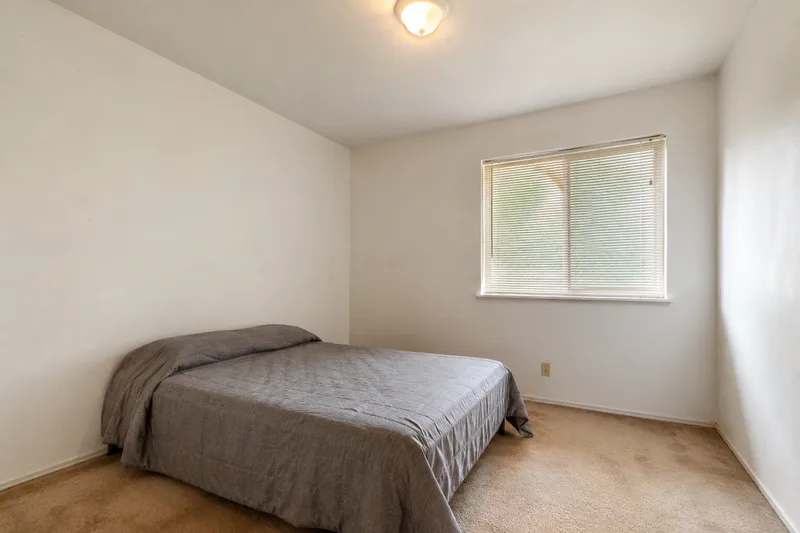
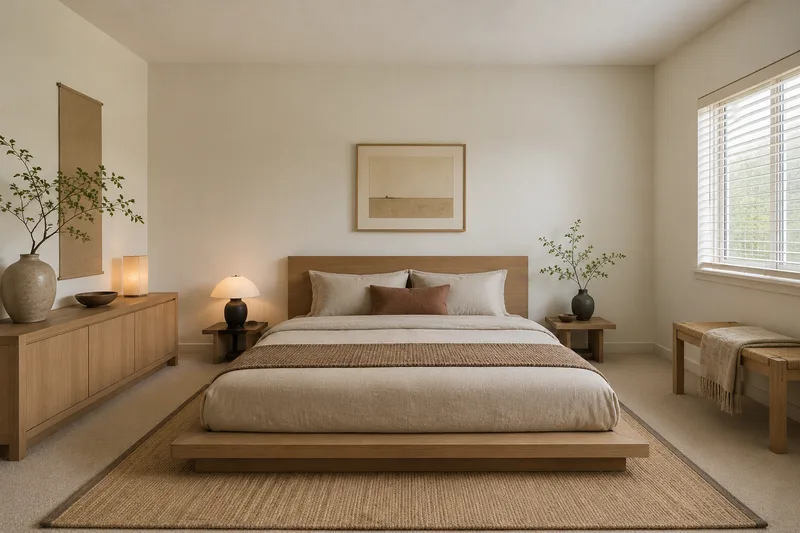
The same plain bedroom, restyled Japandi. Drag the slider on the image, then read exactly what changed — and what it costs to copy.
A Japandi bedroom is a bedroom built on Japanese minimalism and Scandinavian warmth at the same time: a muted earthy palette of warm beige, clay and soft black, natural light wood, low furniture, handmade ceramics and linen, all lit softly and indirectly.
Updated 5 September 2026
BeforeAfter
Japandi bedroom
These sample rooms are AI-generated, not photos of real homes; each “after” was made from its “before” by an image model. Your own photo goes through the live tool.
In practice that means three colours and no fourth, wood you can see the grain of, a bed that sits lower than a standard Western frame, and a wall above the headboard left almost empty. The emptiness is the style, not an unfinished job.
What defines it, item by item
Palette
Warm beige on the walls, clay or terracotta as the single warm accent, soft black — never true black — on frames, lamp bases and hardware. Three tones, and the discipline is refusing a fourth.
Wood
Light and close-grained: oak, ash, paulownia. It appears on the bed frame and the nightstands and nowhere else. Dark walnut reads Japandi in a photograph and mid-century in a real room.
Textiles
Washed linen bedding in oatmeal or undyed white, and one flat-weave or low-pile wool rug. No sheen anywhere — a satin throw kills this style faster than a wrong colour does.
Lighting
Diffused and low. Two bedside lamps at the warm end of the lamp colour-temperature scale, around 2700 K, the value sold as “warm white”; a paper or fabric shade; the ceiling fitting demoted to a light you rarely switch on.
Layout
Low and symmetrical. Bed lower than standard, nightstands at or below mattress height, one object per surface, and the wall above the headboard left bare.
Reading the before and after
The before photograph is a plain bedroom with beige carpet, cheap blinds and one ceiling light — an honest starting point rather than a showroom. In the after, the geometry is untouched: the window stays on the right-hand wall, the floor keeps its level, the ceiling height does not move. Only palette, materials, textiles and light changed. Holding the room still is what makes the styling decisions readable.
The change doing the most work is the wall colour moving from a cold off-white to a warm beige. Cold white under a warm bedside lamp turns grey and slightly grubby; warm beige under the same lamp turns soft. If you take one thing from this page, take that. The second-biggest change is subtraction — the surfaces are clearer in the after than in the before, and copying that costs nothing.
Japandi is also the easiest of the six styles to get half right and have it read as bland. The safeguard is contrast: without one soft-black element in the frame — a lamp base, a picture frame, a stool — the room flattens into beige. Stop the slider halfway and you can watch the dark note doing that job.
What it costs to fake: paint, textiles, furniture
Ordered cheapest first. Japandi is unusual in that the cheap end of the list does most of the visible work, and the expensive end stays optional for longer than you would expect.
Paint — cheapest, highest impact
Four walls of warm beige in a matt finish. Matt, not silk: Japandi has no sheen, and a silk finish bounces the bedside lamp straight back at you. One colour, whole room, no feature wall — a feature wall is the opposite of this style.
Textiles — second
Swap synthetic bedding for washed linen and lose the shiny throw. A linen duvet cover and two pillowcases change the top third of every photograph you will ever take of this room.
Subtraction — free
One object per nightstand, the gallery wall down, the laundry basket somewhere else. It costs nothing and it shows up immediately in a render.
Furniture — the real spend
The low light-wood bed frame is the only part you cannot fake, and it is the last thing to buy rather than the first. A beige room with linen bedding and a dark lamp already reads Japandi on the frame you own.
Skip
Fake plants, macramé and anything sold as “zen”. Japandi and boho are not the same style; the woven-texture layer belongs to the boho bedroom, not to this one.
The exact instruction that produced the after image
No hidden prompt engineering. The after image at the top of this page was generated from the before photograph using the style instruction below, and the same string is what the live renderer sends when you pick Japandi for your own room.
The style instruction quoted above is this site’s Japandi descriptor. The same text sits behind every Japandi image in the Japandi gallery, so you can check it against five other rooms rendered from one string.
The free-tier limits (2 renders a day, no account, no email) and the image licence are stated in the site’s terms. The before and after here come from the reviewed gallery set, not from a stock library.
Colour temperatures follow the standard lamp-labelling scale, where “warm white” is about 2700 K and “daylight” starts around 6500 K. The figure is printed on the box of any LED lamp.
Free · no login · your photo is sent only when you click Redesign — to our rendering service, which the AI reads it from. We never use your photos to train models. Your result stays available for 7 days so you can come back for it.
Upload a photo of your bedroom, pick Japandi, and see it back in about a minute. Free, no login, 2 renders a day.
Kept on this device for 7 days. Renders made with a credit code can also be found on any device by entering the code.
Need more than 2 a day?
Two free renders a day stay free, forever. Credit packs add more — no account, no subscription, and they never expire.
40 renders
or 20 Pro renders
$4.90
$0.12 per render · one-off
Enough to try every style in a few rooms.
100 renders
or 50 Pro renders
$9.90
$0.10 per render · one-off
For a whole home, or a listing you are staging.
Standard vs Pro — same photo, same style
Original photo
Standard (free)
Pro
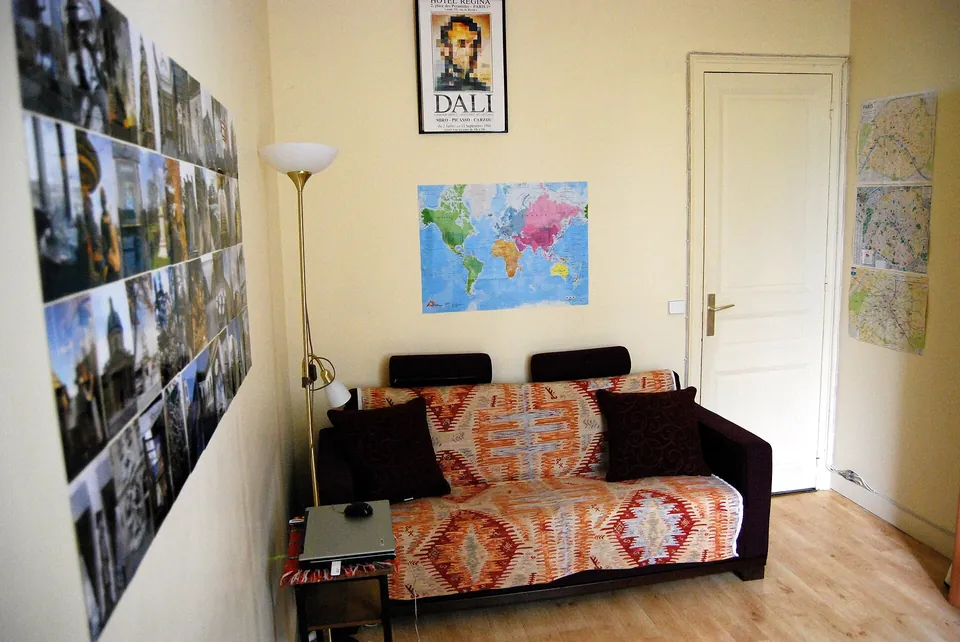
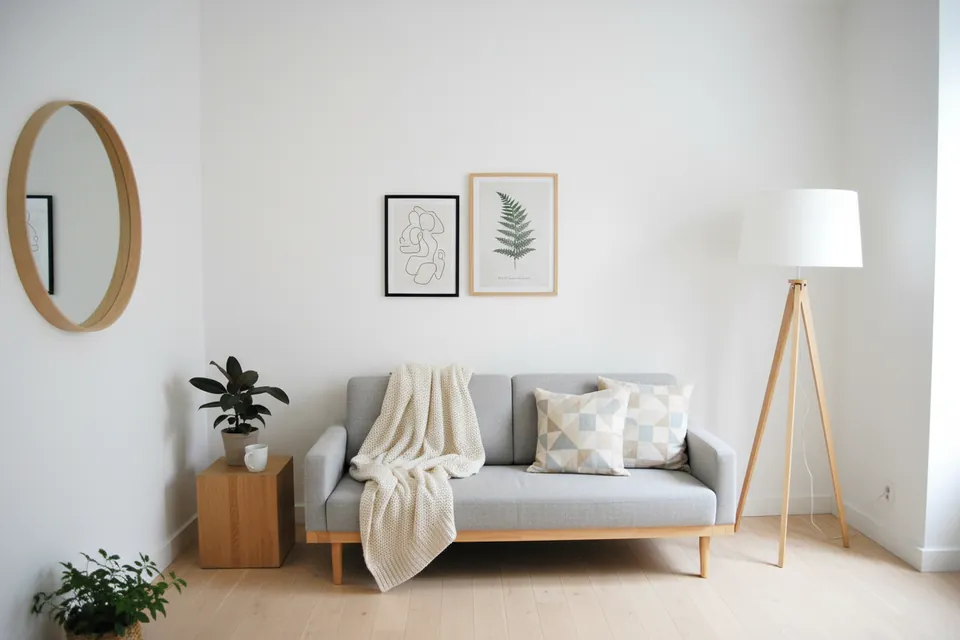
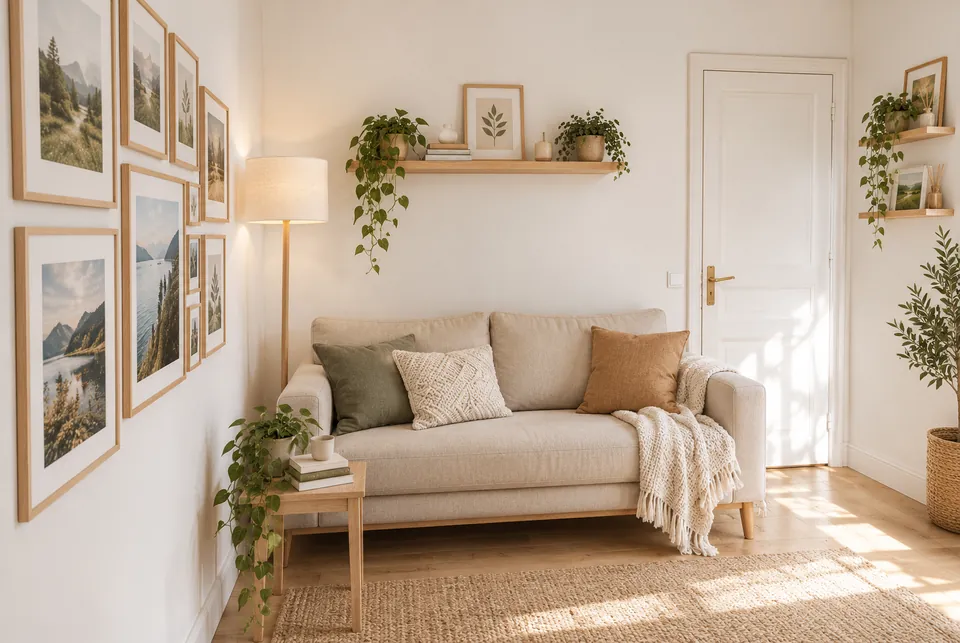
Standard dropped the door on the right. Pro kept it, along with the sofa wall and the lamp corner.
Original photo
Standard (free)
Pro
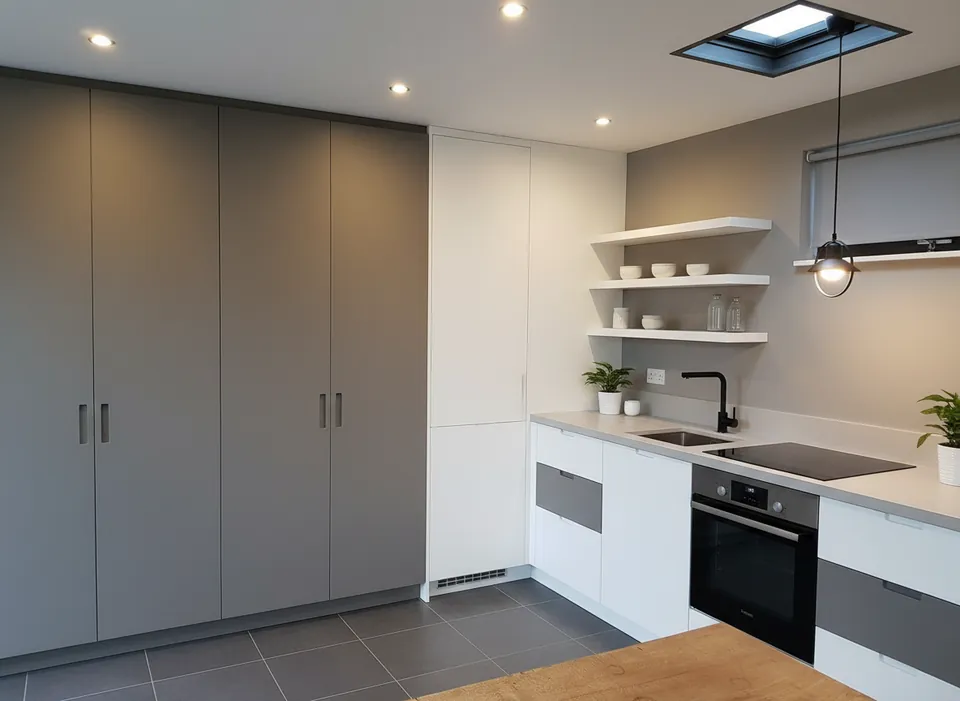
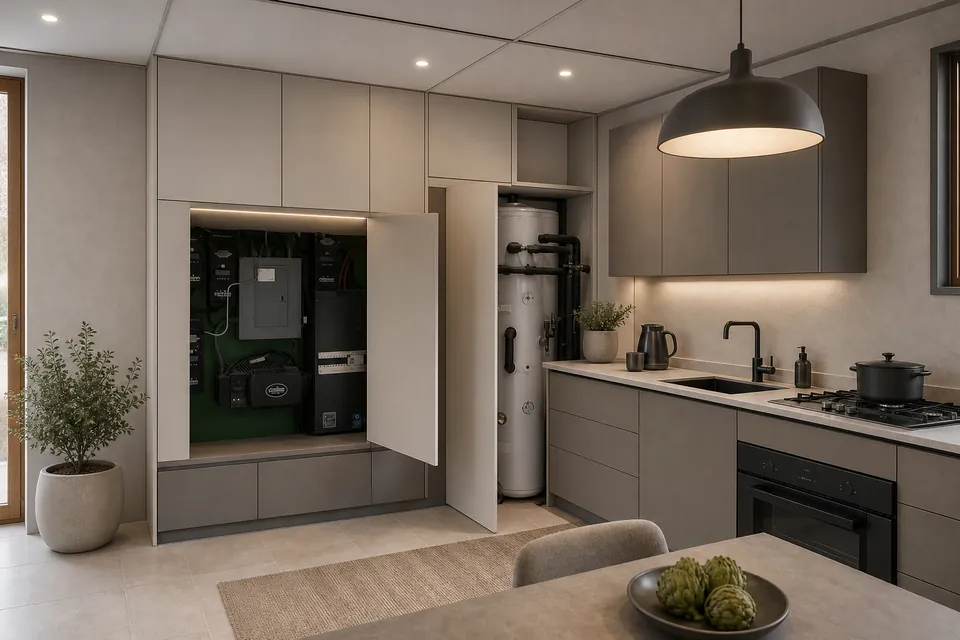
Standard replaced the open utility cupboard, the water heater and the window with plain cabinets. Pro kept all three.
Real photos, one render each (October 2026). Pro is slower and uses 2 credits; Standard stays free at 2 a day.
Your code appears on screen right after payment — no account, it works on any device, and there is nothing to cancel. Credits never expire, and purchases are final. Payment is handled by Stripe; we never see your card. Your receipt and card statement will show Clize.ai, our payments provider.
FAQ
Japandi Bedroom — FAQ
What colours make a bedroom Japandi?
Three: a warm beige or oatmeal for the walls, one earthy accent in the clay-to-terracotta range, and a soft black — charcoal rather than true black — on frames, lamp bases and hardware. A fourth colour is usually what breaks it.
Is Japandi the same as minimalism?
No. Minimalism removes things; Japandi removes things and then puts the warmth back with wood, linen and handmade ceramic. A Japandi room with no texture in it is just an empty room.
Can I get a Japandi bedroom without buying new furniture?
Largely, yes. Warm beige walls in a matt finish, linen bedding, clear surfaces and a warm bedside lamp get you most of the look on the bed frame you already own. The low light-wood frame is the last step, not the first.
Will the AI keep my bedroom’s actual layout?
The renderer is instructed to hold your walls, window positions, ceiling height and proportions and to change only furniture, materials, colours, textiles and lighting. Compare the before and after at the top of this page: same window, same floor line, different room.
 Original photo
  Standard (free)
  Pro
Pro 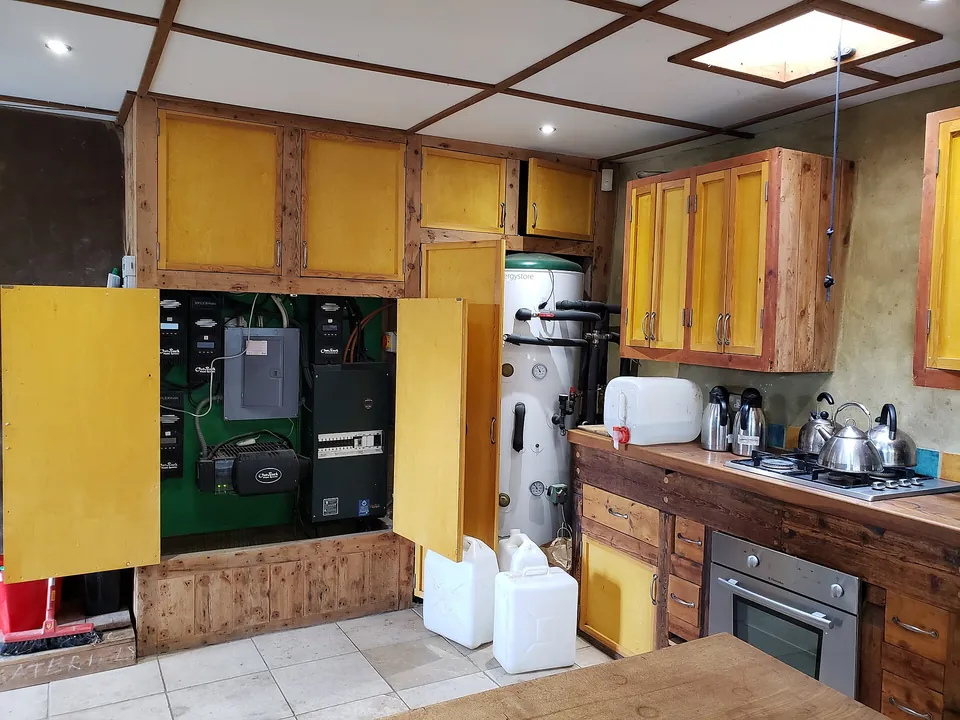 Original photo
  Standard (free)
  Pro
Pro